
IUI vs IVF: Which Fertility Treatment is Right for You and Your Partner?
Starting a family should be one of life’s most joyful journeys, but when conception doesn’t happen as planned, it can feel confusing and overwhelming. If you’ve been trying for a while, you might be hearing terms like IUI and IVF from friends, family, or online searches. What’s the difference? Which one is right for you? At Miraj Fertility Centre, we’ve walked alongside many couples just like you, helping them navigate these choices with compassion and clarity. Let’s break down IUI vs IVF in simple, straightforward terms—no jargon overload, just honest insights to empower your decision.
First, a quick overview: Both IUI (Intrauterine Insemination) and IVF (In Vitro Fertilization) are assisted reproductive technologies designed to help couples overcome infertility. IUI is often the gentler, more affordable first step, while IVF is a more advanced option for tougher challenges. Think of IUI as giving nature a helpful nudge, and IVF as taking things into a controlled lab environment for better precision.
What is IUI Treatment?
IUI involves collecting sperm from the partner (or a donor), washing and concentrating it to select the healthiest swimmers, and then placing it directly into the woman’s uterus around ovulation time. It’s timed with your natural cycle or gentle medications to boost egg production. The process is quick—done in the clinic like a Pap smear—and you go home right after.
IUI is great for:
- Mild male factor issues (like low sperm count or motility)
- Unexplained infertility
- Cervical problems where sperm struggles to enter
- PCOS or ovulation irregularities (we often combine it with medications at our PCOS clinic)
- Same-sex couples or single women using donor sperm
Success rates for IUI in India hover around 10-20% per cycle, higher for younger women under 35. Many couples try 3-6 cycles before moving on. It’s less invasive, with minimal side effects, and costs are reasonable—making it a low-pressure starting point.
What is IVF?
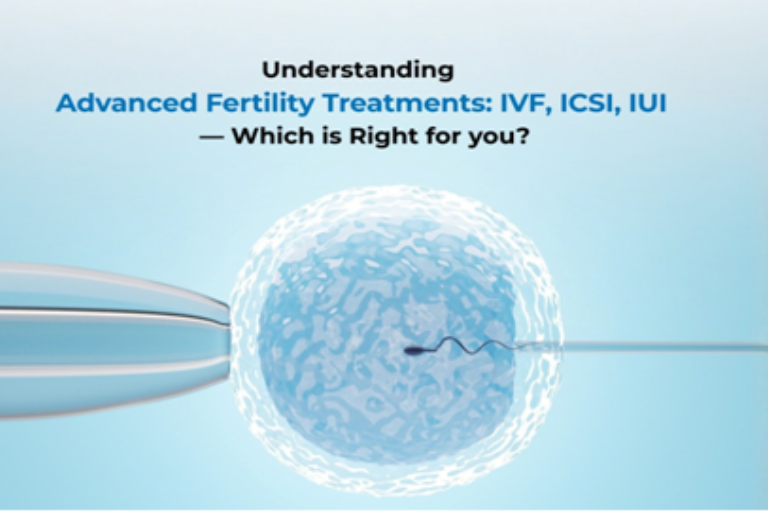
IVF takes things further: Eggs are stimulated and retrieved from the ovaries, fertilized with sperm in a lab dish (or via ICSI for direct injection in tricky cases), and the resulting embryos are grown for a few days before transferring the best one(s) back. Extra embryos can be frozen for later.
IVF shines when:
- Tubes are blocked or damaged
- Severe male infertility (pairing well with PESA/TESA)
- Endometriosis or advanced PCOS
- Older age (over 35-38) where egg quality matters
- Previous IUI failures or recurrent pregnancy loss (our RPL program often recommends it)
Success rates? Around 40-60% per cycle for women under 35 in good clinics, dropping with age but boosted by techniques like embryo freezing. It’s more involved—daily injections, monitoring, and retrieval—but the control often leads to better outcomes for complex cases.
Key Differences: IUI vs IVF
- Invasiveness: IUI is outpatient and painless; IVF involves hormone shots, egg retrieval under sedation.
- Success Rates: IUI lower but cumulative over cycles; IVF higher per attempt, especially with ICSI.
- Time: IUI aligns with your cycle (2-3 weeks); IVF takes 4-6 weeks per full cycle.
- Risks: IUI has low multiples risk; IVF slightly higher
| Aspect | IUI | IVF |
|---|---|---|
| Best For | Mild issues, first-timers | Severe or failed prior treatments |
| Procedure | Sperm placement in uterus | Lab fertilization & transfer |
| Success per Cycle | 10-20% | 40-60% (age-dependent) |
| Invasiveness | Low | Higher |
| Cost | Affordable | Higher but often worth it |
When to Choose IUI Over IVF
Start with IUI if you’re young, have open tubes, mild issues, or want to try naturally enhanced methods first. It’s less stressful emotionally and financially. Many of our patients at Miraj Fertility Centre conceive with IUI, especially with PCOS management.
When IVF Might Be Better
If IUI fails after a few rounds, or diagnostics show bigger hurdles (like low ovarian reserve or severe male factors), IVF offers more control. Advances like better embryo screening, make it even more effective.
Factors to consider personally: Your age, diagnosis, budget, and emotional readiness. Infertility affects both partners, so involve your spouse—support makes all the difference.
Real story: One couple came to us after two years of trying. Mild sperm issues pointed to IUI first—they succeeded on the third try! Another with blocked tubes went straight to IVF and welcomed twins. Every journey is unique.
Myths busted: IUI isn’t “just for easy cases”—it works wonders sometimes. IVF isn’t always multiples or unnatural—it’s a beautiful bridge to parenthood.
At Miraj Fertility Centre, led by Dr. Hema Kothavale, we start with thorough assessments to recommend the best path, whether IUI, IVF, or combined with ICSI/embryo freezing. Our 5 R’s—Reliable, Realistic, Remarkable, Reasonable, Reassess—guide everything.
If you’re weighing IUI vs IVF, don’t go it alone. Book a consultation today—we’re here with hope, expertise, and a listening ear. Your family dream is worth it.

Conclusion
Deciding between IUI vs IVF doesn’t have to be overwhelming—both are powerful fertility treatment options that have helped countless couples in India realize their dreams of parenthood. IUI treatment offers a gentle, affordable start for milder challenges like PCOS or unexplained infertility, while IVF provides higher success rates and advanced solutions (including ICSI with IVF) for more complex cases like blocked tubes or recurrent loss. The key is personalized infertility clinic guidance based on your unique situation, age, and goals. At Miraj Fertility Centre, we take the time to explain IVF vs IUI differences thoroughly, starting with comprehensive assessments to recommend the best path forward with our signature 5 R’s: Reliable, Realistic, Remarkable, Reasonable, and Reassess. You’re taking a brave step just by learning more—don’t hesitate to reach out for a consultation. With the right support and treatment, your family story is still waiting to be written. We’re here to help make it happen.